What Is a Normal Heart Rate While Sleeping?
For most healthy adults, heart rate during sleep falls to roughly 40–60 beats per minute, noticeably lower than daytime resting heart rate. Very fit people and athletes can dip into the high 30s; for others, anywhere up to the 70s can still be normal. What matters most isn't a single number, but your own baseline and how it trends.
Why your heart rate drops at night
As you move into deeper sleep, your nervous system shifts into rest-and-repair mode: blood pressure falls, breathing slows, and your heart rate follows. The dip is deepest during deep sleep, while during REM sleep your heart rate becomes more variable, because dreams are work! A healthy night usually looks like a U-shape: a steady decline, a low plateau in the early morning hours, and a rise before waking.
What can push your sleeping heart rate up
- Alcohol in the evening: one of the most visible effects in the data; even a couple of drinks can raise overnight heart rate for hours.
- Late meals or late workouts: digestion and recovery keep the system busy.
- Stress and poor sleep timing: an irregular sleep schedule keeps your body clock guessing.
- Illness: an elevated sleeping heart rate is often one of the first signs you're fighting something off.
- Caffeine after mid-afternoon: it lingers far longer than most people think.
How to track your sleeping heart rate
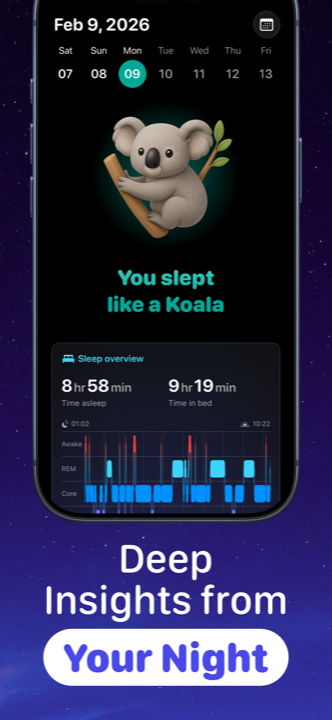
If you wear an Apple Watch to bed, your overnight heart rate is already being recorded (see our Apple Watch sleep tracking guide). The hard part is seeing it in context, which is exactly what Lunomia does:
- Heart rate, breathing rate and blood oxygen from your night, side by side with your sleep stages.
- Your personal baseline: spot nights that ran hotter than usual and connect them to what you did that evening.
- Recovery in your Lunomia Score: the Recovery part of your nightly score compares heart rate, heart rate variability, breathing, wrist temperature and blood oxygen with your own normal (how the score works).
- Trends over weeks: watch your overnight heart rate respond as your sleep habits improve.
- All on-device: data this personal is analyzed on your iPhone, not on a server.
Each night also gets a sleep animal. A calm, restful night might crown you a bear, while a restless, elevated night drops you down the tiers toward a rabbit.
Note: Lunomia is not a medical device. If your sleeping heart rate is consistently unusual for you (very high, very low, or irregular), talk to a doctor.
See your night's heart rate in context
Heart, breathing & oxygen insights next to your sleep stages. Free & private.