
What Is a Good Sleep Efficiency?
Sleep efficiency is the percentage of your time in bed that you actually spend asleep. 85% or higher is generally considered good; 90%+ is excellent. Below about 75% usually means you're spending a lot of the night awake: falling asleep slowly, waking often, or lingering in bed scrolling.
How sleep efficiency is calculated
The formula is simple:
Sleep efficiency = (time asleep ÷ time in bed) × 100
Example: you're in bed from 23:00 to 07:00 (8 hours) but asleep for 7 hours and 12 minutes. That's 7.2 ÷ 8 = 90% efficiency, a very good night. The same 8 hours in bed with only 6 hours asleep is 75%, a sign that something is fragmenting your sleep.
What the ranges mean
- 90–100%: Excellent. (Consistently near 100% with short nights can also mean you're under-sleeping; you fall asleep instantly because you're exhausted.)
- 85–89%: Good, typical for healthy sleepers.
- 75–84%: Fair. Worth looking at evening habits and wake-ups.
- Below 75%: Poor. A pattern here is worth taking seriously, and discussing with a doctor if it persists.
How to improve your sleep efficiency
- Use the bed only for sleep. Scrolling in bed trains your brain that bed = awake time. If that's your weakness, block apps at night.
- Go to bed sleepy, not early. More time in bed without more sleep lowers efficiency. Match time in bed to actual sleep need.
- Keep a consistent schedule. A stable bedtime and wake time anchor your body clock; see how to fix your sleep schedule.
- Watch alcohol and late caffeine. Both fragment the second half of the night.
- If you can't sleep after ~20 minutes, get up, do something calm and dim, and return when sleepy. Counterintuitive, but it protects the bed–sleep association.
Track it automatically with Lunomia
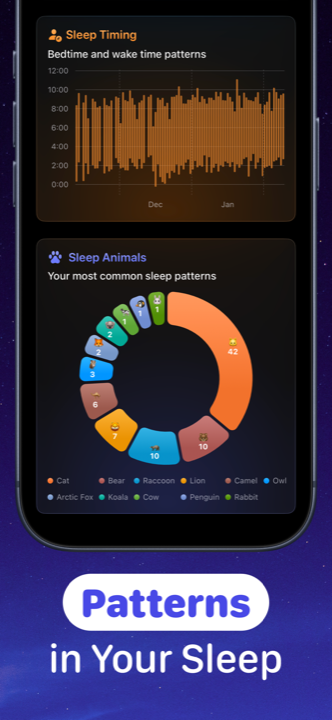
You don't need a spreadsheet. Lunomia calculates your sleep efficiency every night from your Apple Watch data (time asleep vs time in bed) and charts it in the Trends tab alongside sleep duration, sleep stages and bedtime consistency. Change one habit, then watch the efficiency line for two weeks: that's how you know whether it actually worked. And every night gets a sleep animal; efficient sleepers see a lot of koalas and bears, while broken nights drop down the tiers toward rabbits and walruses.
Sleep efficiency is also the biggest piece of the Restfulness part of your Lunomia Score, the single number Lunomia gives every night. Restfulness weighs how unbroken the night was next to your sleep length, deep and REM sleep, schedule and overnight recovery, and brief stirs under five minutes are not counted as wake-ups at all.
Good sleep ≠ 100%. Brief awakenings between sleep cycles are physiologically normal. Aim for a stable 85–95%, not perfection.
Know your sleep efficiency every morning
Automatic, private sleep analysis from your Apple Watch. Free download.